
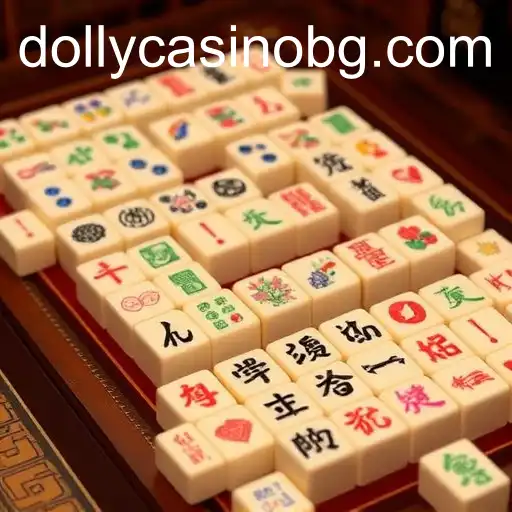
Exploring the Rich Tradition of Mahjong
Mahjong is more than just a game; it is a cultural phenomenon with deep roots and a fascinating history. While often associated with leisure and social interactions, the game of Mahjong offers insights into tradition and modernity, blending them with remarkable fluidity. Whether you're a seasoned player or a curious beginner, diving into Mahjong's intricate world can be quite a rewarding experience.
The Historical Roots of Mahjong
Mahjong is believed to have originated in China during the Qing dynasty, although its exact beginnings remain somewhat shrouded in mystery. Legend has it that Confucius, the renowned Chinese philosopher, played a role in its early development, although concrete historical evidence is lacking. What we do know is that the game underwent significant evolution over the centuries, refining itself into the form we recognize today.
The intellectual appeal of Mahjong is undeniable. The game requires a combination of skill, strategy, calculation, and a degree of luck. Often compared to card games like poker and rummy, Mahjong’s complexity and strategic depth attract players who enjoy a mental challenge.
Understanding Mahjong's Game Mechanics
At its core, Mahjong is a game of tiles. These tiles are categorized into suits such as Bamboo, Characters, and Circles, much like the suits in a deck of playing cards. Additionally, there are honor tiles which include Winds and Dragons, along with bonus tiles like Flowers and Seasons. Each set typically consists of 144 tiles.
The primary objective of a Mahjong game is to build a winning hand by collecting specific sets of tiles such as Pongs (three identical tiles), Kongs (four identical tiles), and Chows (three consecutive tiles in the same suit). A winning hand typically consists of 14 tiles arranged in these combinations.
Global Variations and Adaptations
While Mahjong originated in China, it didn't take long for the game to gain popularity worldwide. Different countries and cultures have adopted their own variations, each adding unique rules or altering existing ones. One of the most famous adaptations is the Japanese-style Mahjong, or Riichi Mahjong, which introduces elements such as the Riichi declared, increasing the game's complexity and strategic diversity.
The Western world has embraced Mahjong with enthusiasm, often modifying the game to suit local tastes. The American version of Mahjong, for instance, is distinct with its own intricacies, incorporating joker tiles and a special scoring system.
The Role of Mahjong in Contemporary Culture
Mahjong is not just a pastime; for many, it is a social ritual with a profound cultural significance. In Asia, Mahjong often plays a central role during social gatherings, celebrations, and family reunions. The game serves as a medium for communication, fostering bonds among players across generations.
In the modern era, Mahjong has transcended its traditional boundaries, finding a new home in digital spaces. Online platforms such as bandbet.bet.br have embraced Mahjong, offering virtual versions of the game that connect players globally. This digital transformation has breathed new life into the ancient game, making it more accessible than ever.
Strategies to Master the Game
To excel in Mahjong, a player must cultivate a strong understanding of the game’s mechanics and a strategic mindset. Observing the discarded tiles is crucial, as it provides insights into opponents’ potential hands and strategies. Aggregating tiles to form strong combinations while remaining adaptive to the dynamic flow of the game is a skill honed over time.
Bluffing is another strategic element, especially in competitive versions like Riichi Mahjong, where misinformation can significantly influence gameplay. Players adept at reading tells and patterns of their opponents gain a substantial edge.
The Influence of Mahjong Beyond the Board
Mahjong's influence stretches beyond the game itself, impacting areas such as language, art, and even entertainment. Mahjong terms and phrases have seamlessly integrated into everyday vernacular in many cultures, demonstrating the game’s pervasive influence.
Aesthetically, Mahjong tiles have inspired artistic creations, from intricate jewelry to beautiful art pieces that pay homage to its elegance and cultural heritage. Furthermore, films and literature have utilized Mahjong as a narrative device to explore themes of strategy, luck, and human nature.
Conclusion
Mahjong remains a timeless classic, bridging the past and present. Its enduring popularity is a testament to the game’s universal appeal and its ability to adapt to the changing cultural landscape. Whether played around a table with friends or through an online connection on platforms like bandbet.bet.br, Mahjong continues to captivate and challenge, preserving its status as a beloved global pastime.